.svg)
.svg)
.svg)
.svg)
.svg)
.svg)
.svg)


A TRUSTED PRENUP THAT’S AFFORDABLE
We value full
financial transparency
.svg)
.svg)
.svg)
.svg)
.svg)
.avif)
.avif)
.png)
.avif)


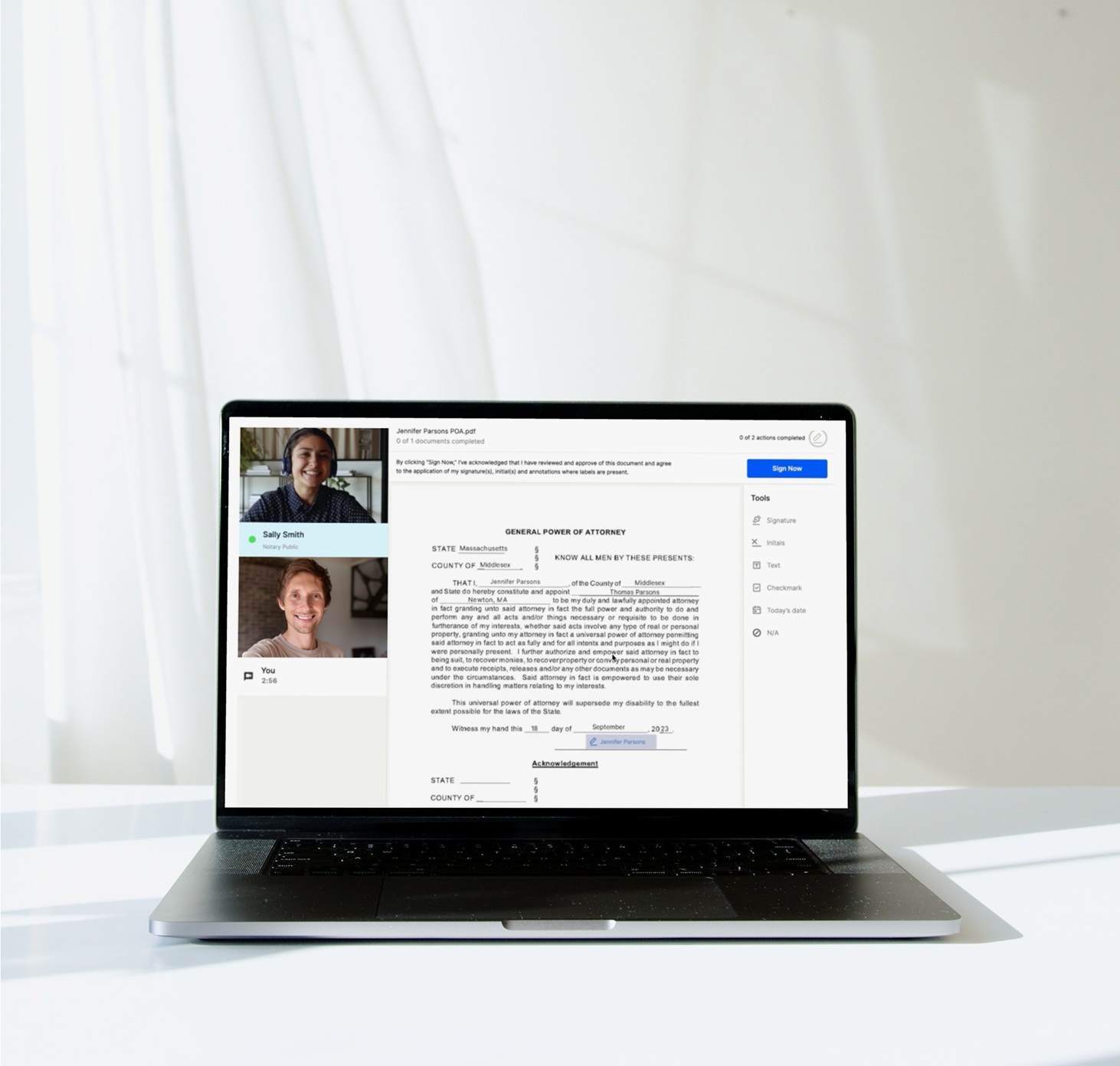
A prenuptial agreement (referred to as a premarital agreement in Florida) is a private contract between two people who plan to marry. Florida refers to their statute as the Uniform Premarital Agreement Act. A premarital agreement is drafted prior to marriage and details the financial rights and ownership of certain property both during the marriage and upon divorce or separation. Premarital agreements can also address what happens in the event of death. In Florida, a premarital agreement is not in effect until the marriage takes place.
What can you include in your Florida prenuptial agreement?

Here are some things you should keep in mind for your Florida prenup:
The Florida Uniform Premarital Agreement Act dictates what can (and cannot) be included in a valid Florida premarital agreement. Per the Act, you may contract with respect to the following:
Florida Uniform Premarital Agreement Act
.avif)
.avif)
.avif)
How does financial disclosure work in Florida?
Marital vs. non-marital property and alimony
This is the official term for jointly owned property
In Florida, marital property is divided equitably in a divorce (but not always equally). This means that a court will look at all of the property acquired during the marriage (i.e., marital property) and determine how to divide it up between the couple based on a set of statutory factors. These factors include the contribution of each party to the marriage, the length of the marriage, the economic circumstances of each party, and more. You can see FL Stat § 61.075 for the full details on how marital property is divided in a Florida divorce.
This is the official term for independently owned property
Non-marital property, also sometimes referred to as separate property, is the property that is not divisible in a divorce. This means that anything considered non-marital property is the sole property of one person only and they don’t have to give any interest of the asset to their partner. Non-marital property in Florida typically includes assets acquired prior to the marriage, acquired by gift, income derived from non-marital property, etc. You can see FL Stat § 61.075 for the full list of what Florida considers non-marital property.
Alimony Upon Divorce
Alimony in Florida is not guaranteed. Instead, it is ordered based on the circumstances of each couple. A court looks at a set of factors to determine whether or not alimony is warranted. First of all, one party must have a need for alimony, and the other party must have the means to pay it. Beyond that, a court may also look at other factors, such as the duration of the marriage, income of each party, and the standard of living during the marriage. You can see the full list of factors considered by a court in FL Stat § 61.08.
Florida prenup case law
In this case, the former husband had been previously married and divorced and insisted on a prenup with his soon-to-be new wife. The agreement stated that former husband was entitled to all property he owned prior to the marriage as well as “any hereinafter acquired, including any salary or income or dividends from such assets or interests.” The agreement also stated that the wife was solely entitled to all of her property, which she currently owned, as well as property she acquired after the marriage. Both parties waived their right to alimony. The former husband attached a list of his assets to the agreement with included approximate valuations (though some valuations were listed as unknown). The prenuptial agreement was completed two weeks prior to their wedding. Both parties were represented by separate attorneys.
The couple was married for 18 years. Upon dissolution, former wife attempted to set aside the prenuptial agreement based on duress, coercion, and overreaching. In deciding on the validity of the agreement, the appellate court conducted a two-step analysis. First, the court decided whether former husband made a full and fair disclosure of his net worth and income to former wife at the time of the antenuptial agreement. Second, the court analyzed whether the former wife entered into the contract freely and voluntarily.
The court ultimately decided that the evidence supported a finding that the agreement was valid based on the fact that the parties were both represented by counsel, the agreement was finalized two weeks prior to their wedding, and former husband disclosed his income and assets in the agreement. Even though some items in the list of assets attached to the agreement were listed as having unknown values, the court determined that the former husband was not attempting to conceal his assets from wife and that the asset list gave wife “such general and approximate knowledge of his property as to enable [the spouse] to reach an intelligent decision to enter into the agreement.”
After living together for several years, former husband and wife got married. Around two months before the couple married, the former husband broached the topic of a prenuptial agreement for the first time. Former husband gave former wife a draft of the prenuptial agreement one month prior to the wedding and gave her a list of attorneys to consult regarding the agreement. Former wife first spoke with an attorney 11 days before the wedding. Upon this consultation, the attorney counseled former wife not to sign the agreement because it waived all of her rights to any interest in property acquired during the marriage as well as her right to alimony. The attorney told former wife that she would contact former husband’s counsel regarding the agreement. Former wife did not speak to her attorney again until after the wedding.
The next time she saw the prenuptial agreement was at 11:30pm the night before the wedding. Former husband instructed her to sign and notarize the agreement. The agreement was notarized at 2:00am the day the wedding. In the frenzy to complete the process prior to the wedding, former wife did not fully read the agreement prior to signing it. The finalized agreement was similar to the original draft except for two revisions allowing the wife limited alimony and a provision that former husband agreed to provide former wife with health insurance. When the former wife’s attorney received a copy of the agreement after the wedding (and after it had already been signed by former wife), she sent her a letter stating that the agreement remained unfavorable and inequitable. The former wife took no further action regarding the agreement.
Upon dissolution, the former wife sought to have the prenuptial agreement set aside based on duress. However, former husband argued that even if former wife signed the agreement under duress, she later ratified the agreement by not taking any action to modify the agreement or seek further assistance from her attorney. The trial court agreed with the former husband and declared the prenuptial agreement to be valid and binding on the parties.
On appeal, the appellate court reversed the trial court’s ruling and declared the prenuptial agreement to be invalid based on duress. Further, the appellate court determined that it was contrary to public policy to “validate a prenuptial agreement based upon a spouse’s failure to seek revision, amendment, or to set aside a prenuptial agreement during the parties’ marriage.” The proper analysis when the argument of duress is present, is for the party disputing duress to present evidence that the agreement was in fact, entered into freely and voluntarily.
This case emanated from a cycle of break-up and make-up between the parties that spanned several years and more than one divorce (read the full text for all the juicy details). Before getting married for a second time, the former husband insisted on a prenuptial agreement. The parties, both represented by counsel, spent several months negotiating the terms of the agreement. The former wife was aware of the former husband’s considerable net worth. The negations continued all the way up to an hour before the ceremony.
Upon separation, the former wife attempted to have the agreement set aside based on duress. The former wife argued that at the time she entered into the agreement she was seven months pregnant, her pregnancy forced her to leave her job as a flight attendant, and the agreement was not signed until one hour before the wedding. In analyzing the situation, the court stated, “[f]ocusing on the entire prenuptial negotiations, and not just on the endgame, leads to the conclusion that … there was no duress.” The factual scenario in this case lacked the time pressure aspects of some other cases (for example, where the prenuptial agreement is introduced for the first time shortly before the wedding) as the parties negotiated, while represented by counsel, for months. The court interestingly noted that the couple also married in a courthouse ceremony which could have been canceled much easier than if the couple had hundreds of wedding guests waiting along with the expense of a lavish wedding. So, the fact that the agreement was signed shortly before the ceremony is not the only factor considered by the court in determining whether a prenuptial agreement is entered into invalidly.
The parties in this case waived their right to alimony and specified in the prenuptial agreement that the waiver was effective as of the date that either party filed a petition for dissolution of marriage. However, the former wife sought temporary alimony during the period of time between the filing of the petition and the entry of a final judgment of dissolution. Based on the prenuptial agreement, the trial court denied the former wife’s request for alimony. However, on appeal, the appellate court reversed the decision of the trial court and declared that the former wife was entitled to temporary alimony (pre finalization of the divorce). In doing so, the appellate court reasoned that, “Florida law approving prenuptial agreements concerning post-dissolution support has so far not extended to provisions waiving the right to recover pre-judgment support such as temporary alimony.” The court definitely declared that pre-dissolution support cannot be waived.
In a prenuptial agreement, former wife waived rights to all of former husband’s solely owned property (acquired both prior and subsequent to the marriage). Upon dissolution, former wife argued that she was entitled to equitable distribution of the appreciation in value of husband’s solely owned property, which was not specifically addressed in the prenuptial agreement. The court found that the broad language of the prenuptial agreement excluding the parties from any and all interest in the solely owned property was sufficient to include enhancement in value and appreciation of the property, even that which is due to marital funds or labor, as non-marital property which was not subject to equitable distribution.
Responding to a certified question of great public importance, the Florida Supreme Court ruled that a provision in a prenuptial agreement that authorizes recovery of fees (including attorney fees and court fees) by the prevailing party in lawsuit to enforce a prenuptial agreement is valid and enforceable. While a clause of this nature technically pertains to expenses incurred during the marriage, it is nonetheless valid because it is concerned more with distributing assets post-divorce than with pre-dissolution support (noting that Florida law has not yet extended freedom of waiver of post-dissolution support to waiver of pre-dissolution support). Additionally, the court also distinguished prevailing party clauses from support provisions in that they are intended to protect and indemnify a party who relies on the prenuptial agreement versus enriching the prevailing party. The court’s ruling was narrowly tailored to the issue of prevailing party clauses and did not address the validity of provisions under which a spouse has waived pre-dissolution support.
.png)
.avif)
.avif)
.avif)
.avif)
.svg)
.avif)
.avif)

.avif)
.avif)
.svg)
.svg)
.svg)
Same-day completion. Taxes included.
Start your prenup for free.svg)





.svg)
.svg)
.svg)
.svg)
.svg)
.svg)